Monday, August 16, 2021

Love in the time of Covid

In the summer of 2019, I decided that I was going to visit Machu Picchu in 2020. I started looking at flights and various tours. In the midst of my searching, I received an email from Living in the Light about a retreat in Peru in March of 2020. I would be able to enjoy a wellness retreat, visit Machu Picchu, and see Lima within the same trip. I immediately decided that once again the retreat came at the perfect time for me.  I wouldn't have to plan anything other than my flights, so this was a win. I made the reservations and I was ready to go. My flight was scheduled to depart for Peru on March 13, 2020. However, I received a cancellation email from United Airlines on March 12. After that weekend, the world as we knew it came to a stop due to the Covid-19 global pandemic. In the spring of 2020, we foolishly thought things would be normal again by the fall. The retreat was rescheduled for August 2020, then March 2021.

In the meantime, all international travel was on hold. My last international flight was to Mexico for my birthday in January 2020. I flew to Chicago for a funeral in June. I remained grounded after that, but I didn't stop exploring. I embarked upon road trips around Texas, and had a good time visiting new places and revisiting others with great companions.

During 2020 and the first half of 2021, I experienced loss, as did the rest of the world. Life changed dramatically.  The world that I knew changed.  We lost my mom's 2 surviving sisters - Aunt Mae, my rock, and Aunt Mil, my great tree - as well as other loved ones. There was a lot of grief and pain. However, what I felt most was love. Love from my family and friends, love from God through grace, and love for myself. I knew things would be better.

The Living in the Light retreat was rescheduled to August 2021. Before leaving home for the airport in Houston, I paused to think about what I wanted to take with me to this sacred space built by the Incas, and my eyes landed on Aunt Mil's tam. It was easy to carry and fit easily into my already full bag. "Auntie's beautiful, cute, educated, pretty, sweet, little traveling niece" finally visited Machu Picchu and took a symbol of the giants who built the platform for me to stand. While there, I carried with me the love and light that I received, and I radiated joy. It wasn't because of the location though. It was inside of me all along and I only had to recognize it like Dorothy.


Sun Gate that the sun illuminates only during the solstice


Friday, July 12, 2019

Frequently Asked Questions for "Operation Let Go"

I fulfilled my dream of traveling around the world in 2018. After returning home, I was asked the following questions by many (many) people.

Where did you go? How long did you stay in each place?
Thailand (1 month) - Chiang Mai, Pai, Bangkok, Krabi/Ao Nang
Singapore (1 week)
Malaysia (2 weeks) - Kuala Lampur
Indonesia (1 month) - Lombok, Gili Trawagan
India (1.5 month) - Delhi, Jaipur, Ft. Cochin (Kerala), Mumbai, Nashik
United Arab Emirates (UAE)  (1 week) - Dubai, Abu Dhabi
South Africa  (2.5 weeks) - Johannesburg, Pretoria, Cape Town, Port Elizabeth
Ethiopia (7 hours) - Addis Ababa (long layover)
Egypt (5 days) - Cairo, Alexandria, Memphis, Giza
Netherlands  ( 24 hours) - Amsterdam (overnight layover)
The length of time was based on visa restrictions, things to do/see, and whether I wanted to stay longer before moving to the next location.

How long were you gone?
July 2018 to December 2018

Are you back back?
For now...

Did you travel alone?
I was alone most of the time. I'm an introvert, so being alone wasn't a big deal for me.  I made an effort to connect throughout my journey by going to Toastmasters meetings and joining black expat groups in various countries.  I also met people when I took group tours. Talking to other people sometimes helped me figure out where I wanted to go next. My boyfriend came to visit me in 3 cities too. 

Did you run out of money?
No, I did really well with my budget and was still able to do everything I wanted.

Did you have a lot of luggage or did you backpack? How did you know what to take?
I took a backpack and a small carry-on bag. I also used a small day bag for my daily adventures that usually included water, poncho/umbrella, snacks, battery pack, and a sarong. I researched female packing lists on Pinterest to help me get started and made adjustments as needed. My motto when it comes to luggage is, "Don't you carry nothing that might be a load." I need to be able to handle all my luggage by myself, which could include walking up and down steps or running through the airport.  See my packing list here.

What was your favorite place?
I liked them all for different reasons and wouldn't mind revisiting a few places. I can see myself living in Chiang Mai and Johannesburg.

What was your favorite moment?
I had lots of favorites. My most fulfilling moments happened while volunteering in Indonesia and visiting Ubuntu Centre in Port Elizabeth.

Would you do it again? 
Yes!

Why did you travel around the world by yourself? 
I took the journey because I dreamed about it for years. I finally decided that there was no time like the present, and I needed to do it while I could. I did it alone because I wasn't going to wait until other people could save money, retire, get married/divorced, send the kids off to college, etc. It was a solo journey because that worked best for me. 

Were you scared?
Yes. The scariest part was buying a one-way ticket and not knowing where I would end up. Also, the Indian trains were a formidable foe.  In general, my safety plan included the following:
  • Buying travel insurance (My personal belief is to always have insurance if it will cost more than $400 for me to get home. I don't leave home without it.)
  • Having regular check-in calls, forwarding flights and room info. to my mom, telling my hosts about my plans for the day (someone always knew where to find me)
  • State department country registration in case of evacuation
  • Trying to blend in as much as possible, which was impossible everywhere, except for South Africa. Sometimes my foreignness was also protection, because everyone noticed me. Drivers stopped and stared when I crossed the street instead of flying through intersections. People were very helpful in many cases because they wanted to be good hosts to an obvious outsider.
  • Using my American privilege when needed (hurting Westerners brings bad publicity to an area and can cripple tourism)
  • Asking local friends and hosts to translate and/or make travel plans for me when needed
  • Sharing Uber ride info., especially at night 
  • Being always aware of my surroundings and knowing how to get back "home". I saved offline directions on my phone just in case there was no internet access and I also used local paper maps when available. I ducked into businesses or restrooms to reorient myself privately if I was lost.

Pack light

Here's an update on my packing list for Operation Let Go.
  • One of the straps on my backpack was ripped apart when I landed in Krabi. Amazon gave me a refund, and I ordered a new one.
  • My Fitbit charger broke when I pulled it out of my bag. I ordered a new one on Amazon after an unfruitful search in Bangkok.
  • I ordered hiking boots after I arrived in Chiang Mai, but they were returned before I wore them.
  • I was given 5-finger "Vibranium" shoes that replaced my running shoes, swim shoes, and hiking boots.  I only carried those shoes and flip flops.
  • I needed safety equipment and camping supplies for my volunteer work in Indonesia. I added the following: safety glasses, work gloves, quick dry cargo pants, mosquito net, inflatable mattress pad, compact sleeping bag, and steel toe boots. It took some very creative packing to fit everything in my bags. I wore the boots in the airport so I wouldn't have to carry them. I walked like Herman Munster in those heavy boots.
  • I mailed some souvenirs and clothes home while in Ft. Cochin and Mumbai to make room for other things I might find along the way.
  • I bought another sarong. The versatility is amazing. It can be used as a towel, a bed cover, a headwrap, a dress/top, a covering for temples, a blanket, and more.
  • compact towel
Returns
  • FAMU hoodie that I only wore on planes, but it would have been nice to have it in South Africa
  • Cotton yoga pants - too hot
  • 2 Tank tops
  • Extra underwear and socks - I only needed socks for my boots and on long flights. 
  • Tankini - I wore my one-piece swimsuit if there was a swimming opportunity.
I am grateful for my boyfriend. He was my courier. I had Amazon packages delivered to him, and he would bring them to me when he visited. He also took all my unwanted/unnecessary items back home to lighten my load. Thank you, JaVar!

Ubuntu

From my time in South Africa in December 2018:

South Africa felt like home.  I saw people around me who reminded me of friends, family, classmates, etc. that I knew in the US.  I visited 4 South African cities - Johannesburg (aka Joberg or Jozi), Pretoria, Cape Town, and Port Elizabeth (PE). I traveled by Greyhound bus (not the American company) from Pretoria to Cape Town, stayed for a few days, and then took the bus to PE. After a few days in PE, I rode the bus back to Pretoria. In each city, I experienced the spirit of Ubuntu.  Ubuntu is a Bantu concept from southern Africa, which connotes human connection, and is sometimes defined with the phrase, "I am because we are".  It essentially means that all humans are connected, and when we recognize our common humanity, then we treat each other with respect, humility, compassion, and love.

I had a bright idea to travel across Africa overland from Cape Town to Cairo, but I didn't have much time to plan the trip myself, and the tour companies were pretty expensive. I will return to the continent one day and make it happen.

South Africa was more than I expected, and it was exactly what I needed at that time. I heard several people from SA, Egypt, and Ethiopia describe the country as "different from the rest of Africa" and "Africa-lite". To me, it was a great blend of the familiar and the exotic. It was very western in many ways, and still traditional in other ways. The country is still shedding the cloak of apartheid and mistakes have been made along the way, yet there is hope and optimism as they continue to develop. I could see myself living there.

Johannesburg
Joberg seemed to be the soul of South Africa. It felt alive to me. The city buzzed with excitement and energy. It was in Johannesburg and nearby Soweto where many political fights against apartheid happened. One of the things I loved the most was that I finally had someone else wash, retighten, and style my hair, which hasn't happened in years. I also saw a movie at a small arthouse theater in Maboneng, called "High Fantasy". I purchased a ticket for the City Sightseeing Bus to go around the city and see the most popular landmarks, like the Apartheid Museum, Constitution Hill, and the Carlton Centre (Africa's tallest building). As much as I enjoyed Joberg, the city has a bad reputation amongst tourists and other South Africans. People like to highlight crimes committed in the area, however, I view it as any other big city where you always should be on alert. A Capetonian told me that "Johannesburg is like Chicago". Maybe that's true. He meant it negatively, but I know that there is much more good in Chicago than the violence that is continuously reported, and the same goes for Joberg.
 

Pretoria
When I was considering covering the continent, I reached out to a couple of friends with African connections, and one of them led me to Pretoria. The city is one of 3 South African capitals, and it is located about 45-60 minutes from Johannesburg. It is calm and relatively quiet compared to neighboring Joberg. I stayed with my new family in Pretoria. I was initially confused when they told me they spoke Swahili, because I knew it was considered more of a central/eastern African language. I also figured that Swahili wasn't one of the 11 official languages of South Africa. It made more sense when I learned that they immigrated from Rwanda by way of Congo to South Africa. The family made me feel so welcomed and comfortable in their home. I was the first American visitor they had, and they invited friends to come meet me while I was there. I was also the first vegetarian, which was a curve they didn't expect. I had great food prepared for me, and I also showed them how to stir fry broccoli with onions and peppers. We later added carrots and potatoes. It was the first time they had cooked broccoli at home.  They introduced me to the dramatic South African "soapies", like "The Queen", "Scandal", "Rhythm City", and other nightly soap operas with varied story lines that all seemed to run together.  The kids took me on a brief tour of the city. There's not much to see in Pretoria other than the Union House capital building. We also went to a nature park on a hill overlooking the city. We stopped at the city's bus station too. I wanted to rent a car and drive from Pretoria to Cape Town to Port Elizabeth along the garden route, but it was much cheaper and easier to take the bus. I also was unsure of my driving skills on the opposite side of the road and car. My new family helped me find the right ticket and took me to the bus station to see me off. They took great care of me. I returned to Pretoria for a couple of days before I left the country. It felt good being surrounded by family.


Cape Town
The bus to Cape Town took nearly a day and was a few hours behind schedule. We stopped in every little town between Johannesburg and Cape Town (almost 900 miles) with a break of 15 minutes every 3-4 hours. Most of the journey was at night. I know I could have flown, but I wanted to see as much of the country as possible. South Africa's landscape is magnificent. I passed by farmland, vineyards, mountains, and grassy prairies. The view of Table Mountain welcomed me into the city of Cape Town, the final bus stop.  The natural beauty of the city was captivating.  I found it very ironic though that this city that was surrounded by water was experiencing an extreme drought and so was the rest of the South African cape (coast).  Evidence of the drought was everywhere.  Residents and businesses were required to follow strict water restrictions.  For example, I saw public restrooms with 8 or 9 sinks, but the taps were only open for 2.  Signs around the restrooms asked visitors to restrict flushing unless necessary and use alcohol-based hand sanitizer.  Homeowners were not allowed to fill their pools and each home had a per person water quota that included fines for overuse.  It's a good thing I learned how to be efficient with bucket showers in Indonesia.

Once again, I found it cost effective to tour the city on the City Sightseeing Bus, so I bought a 2-day pass that included all the major points of interest, plus a canal tour, sunset view of Table Mountain, and a stop at wineries. I took the city bus downtown in order to start the tour each day.  I also purchased a ticket for a city bike tour, which included Bokaap, the former home of enslaved Muslims that is now being gentrified.

Table Mountain


"Tupac Amaru Shakur is alive...I think he's in Canada." - Mr. Steward
 

Port Elizabeth
I arrived on the bus from Cape Town not knowing what to expect in Port Elizabeth (PE).  What I encountered was much more than I dreamed possible.
The day before I arrived, my Airbnb host contacted me asking if I would be interested in a township tour when I arrived.  Of course I said "yes!".  My tour would include Zwide Township where my host, Nick, grew up.

The first night of my arrival, we watched the Global Citizen concert celebrating Nelson Mandela live on tv from Johannesburg. His daughters walked out on stage and greeted the South African audience with the familiar "Amandla!"(power), and I responded along with the audience, "Awethu!" (to the people). Nick was shocked that I knew the popular Nguni phrase used by freedom fighters during apartheid. I told him that I was in the process of creating a nonprofit organization focused on empowering communities through education, and it would be called "Amandla!" He was impressed.

The next morning, Nick and his girlfriend took me to the township, and pointed out meaningful landmarks along the way. Our first stop was the Ubuntu Centre. The center included a clinic for HIV/AIDS patients, a nursery school for families being treated by the clinic, a cafe, a vocational school, a computer lab, and much more. It started with a couple of volunteers tutoring students in a broom closet at a school several years ago, and became a beacon of hope in the middle of the township. Our tour was led by the Deputy President, Gcobani, who enthusiastically shared the history as well as the future goals of Ubuntu. He also tried to teach me Xhosa words along the way. We were only supposed to spend 30 minutes at the center, but we actually stayed for 2 hours, and I loved every minute. Nick knew from our conversation the night before that the work they were doing was important to me. I could have stayed all day. Seeing the Ubuntu Center gave me visual confirmation of my dream for Amandla! I saw what was possible.

After leaving Ubuntu, we visited the local school where the program first began, and where Nick attended. The students were on break, and we toured the building on our own after checking in with the office. I saw the broom closet. I saw the computer lab that was donated to the school by Ubuntu after they moved to a bigger space. I also saw the classrooms and schoolyard, and was quickly reminded of scenes from Sarafina. From the school, we went to a new business development center for entrepreneurs. The business that we visited was a bread shop owned by a woman. We watched her take the balls of dough and fry them on a hot plate. Her business was doing so well that she no longer had space to make the bread from her home, and she won a grant for cooking equipment that still needed to be installed after the electricity was properly setup. We bought a few pieces of bread and took them to Nick's mother's home for a snack. His mother reminded me of my aunt. She was generous, kind, and gave all praise to God for everything.


Many people have asked me if I would want to live in any of the countries that I visited on my journey, and I enthusiastically tell them that I could see myself living in South Africa and Thailand. I absolutely loved my time in South Africa, and I look forward to going back again.

Sunday, December 23, 2018

...where there's love overflowing

I have run the race set before me. My current journey is coming to an end. I have seen places and met people throughout this journey that helped me create memories that will last a lifetime. I have experienced things that I never thought I would. I have done things that scared me, and did them afraid. I have expanded my mind and my heart. I helped people who were suffering. I found ways to communicate without words. I formed new relationships with people who really aren't so different from me. I trusted people in a way that I never have before. I let go.

The long journey home has just began. I am currently on a flight from Cairo and I will arrive in Houston in 2 and a half days. When looking at flights home, I had an option with a much shorter duration, but I found that I could see more cities in between for just a little more money. I'm flying from Cairo to Athens, and then I have 29 hours in Amsterdam. I'm leaving the airport to check out the city of course. After Amsterdam, I'm flying to Manchester, England where I have a 12 hour layover before finally flying to Houston. My return is a surprise to everyone at home. I'm both excited and scared right now, which is exactly how I felt before leaving home in July. I'm excited about going home and being with the people I love most and where things are convenient and familiar. I'm scared because I am a different person now, and I won't be going back to life as I knew it before. I have changed and the way that I do things in the future will change. The scariest part is I don't know exactly how those changes will play out. I'm still processing what happens next. All I know is I'm walking into a new life, because I let go.

Sunday, December 16, 2018

Fine City

Unpublished from September 2018

The movie, Crazy Rich Asians, is a romantic comedy with the first full Asian cast in Hollywood in 25 years. I decided to see the movie in Kuala Lumpur after hearing a lot of buzz. It was my second movie in Malaysia. My first movie theater experience was when I saw The Darkest Minds. I expected that there would be an anthem before the movie, like in Thailand, but there wasn't. I assumed all the monarchies would have the same rules. (I'm still trying to understand what's expected in a monarchy.)
Crazy Rich Asians is a cute movie that I recommend if you want to see a light-hearted comedy about love and it's various forms. I recognized many of the actors from their other projects. The character that stood out the most to me though was Singapore. It is a city-state, which was formerly part of the federation that combined Malaysia, Singapore, and Indonesia. The movie highlighted all the great things about Singapore just like Girls Trip was a commercial for New Orleans/Essence Festival. I was already planning to be in Singapore a few days later, so I made mental notes of things to see there while watching the movie, including the building with the boat on top (Marina Bay Sands), the Gardens, Chinatown, and the Harborfront. I reached out to a couple of my FAMU classmates who previously lived in Singapore for suggestions too. My boyfriend would also be meeting me there, and I was excited about exploring the city with him. We had a wrench thrown in our plans when my boyfriend missed his connecting flight in San Francisco because the flight from Houston sat on the tarmac for 1.5 hours waiting on a gate at SFO. He was rebooked on a flight the next morning, which meant we lost a whole day together. We made the most of our time anyway. 

The only activity that was confirmed for our trip was a special dinner reservation at NOX that I rescheduled after the flight delay. We had the most amazing experience at Nox - Dine in the Dark. I found the restaurant online after seeing an ad for a similar restaurant in KL. We arrived at Nox a few minutes before our reservation, and we were the first people to arrive for dinner that evening. The host/bartender explained the concept when we walked in and let us sample a couple of appetizers that were on the menu that evening. We locked up our phones and watches and anything that might produce light. When we were ready, we entered a door where our visually impaired host, Bernard, was called to escort us to our table in total darkness. Once we were seated, he told us where the glasses and silverware were placed on the table and guided us on how to enjoy ourselves and remain safe over the 3-course meal. It took some time for us to adjust to the darkness and really relax into the experience. Both my boyfriend and I have general personal safety rules in public spaces.  We had to let go of all those rules based on sight at Nox. Instead, we used our other senses, paying special attention to the sounds around us. We enjoyed the food and drinks placed before us and tried to guess the ingredients based on taste, texture, and smell. He and I ate totally different meals - he's a carnivore who doesn't eat seafood and I'm a vegetarian who eats seafood (pescetarian). Nox has a set menu that they change each month. They ask guests for their food allergies and special diets at the time of the reservation, during the initial welcome, and the host confirms it when you're seated at your table. After dinner, Bernard escorted us back to the lobby where we had a pop quiz. The host asked us to write down what we thought we ate, what ingredients were in the drinks, what we liked most, etc. Then, he gave us a breakdown of our actual menu, and we were surprised by how many ingredients we missed. We also asked questions about the dining room layout, and learned it was much bigger than we thought. I was curious about how Bernard knew which meals came to our table and never confused them between the two of us. I learned that there is a sighted person in the kitchen who places the meals on different trays in a dumbwaiter and maintains the order making it easy for the visually impaired hosts to deliver them accurately. I highly recommend dining in the dark, and I plan to do it again in other locations. It is pricey, but well worth the experience.

After our fabulous dinner, we walked a couple of minutes and were transported to the streets of Istanbul. Beautifully decorated shops and restaurants with delicious aromas lined the Arab streets.
We also explored the following sites over the next few days: Singapore Flyer, Sentosa Luge, Chinatown, Little India, Chinese Garden, Harborfront, and Clark Quay.

Before seeing the movie and visiting myself, all I knew about Singapore was 1) I had a pen pal there in high school named Mahdia md Noor that I wish I could have met in person, and 2) they caned an American years before because he defaced property or something like that. At home, we like to say "Don't mess with Texas". People really should not mess with Singapore. They are on high security alert and seem to be in a constant state of fear. I first noticed when armed military walked back and forth through the airport. Also, everywhere we went there was a sign prohibiting something, from chewing gum to molesting (groping) women to trespassing, and the punishment was a fine and/or caning and sometimes death. Selling, using, and/or possessing drugs will get you killed. Check out some of the weird laws here: https://adventurousmiriam.com/10-weird-laws-singapore-get-trouble/

Don't mess with Singapore!


NOX


Sunday, December 9, 2018

A brief history of apartheid

Disclaimer: This is information that I synthesized from memory of various sources, including tours and visits to the Apartheid Museum, Constitution Hill, District 6 Museum, South African Museum, Groot Constantia Estate, South African Slave Church Museum, and more. 

When the Dutch first settled in what is now Cape Town, South Africa in the 1600s, they created a supply stop on the route from Europe to India in search of spices for their bland food. They planted fruit and vegetables and made wine to sell to the ships passing around the Cape of Good Hope. Without those foods, many sailors would die of scurvy, or vitamin deficiencies, on the long voyage. They needed laborers to plant and harvest the crops though. They also needed labor to build homes and other structures. Who did the work? You guessed it, slaves. The Dutch East India Company was under strict orders not to enslave the powerful local Khoe-San people, because they were valuable trading partners - in the beginning. Instead, they brought in slaves from East Africa, India, Indonesia, and Madagascar. Eventually, the Khoe-San were overpowered when the whites steadily encroached upon their land. When they filed official grievances with the Dutch government, they were basically told to shut up or they would be killed, because the whites had the guns. Later, the British took control of the Cape. Slavery was abolished throughout the British empire in 1834, but the people were not fully emancipated, and were forced to continue working in bondage until 1838. Just like in America, many of the former slaves returned to the same land as sharecroppers, slavery by another name.

Meanwhile, the area that is now known as Johannesburg, was a grassy plain without any permanent settlement until gold was discovered in the late 1800s. Workers came from all over southern Africa, India, and other places to earn a fortune, that never came to fruition. The mine workers, including whites, lived in poor, unsanitary housing, and the mines were dangerous, deadly places. Slavery was officially over at that point, but gold mining, was essentially a form of sharecropping. The only benefactors were (still are) white, corporate owners.

Poor people of all races lived in the same slums. The urban areas needed the workers in order to be sustainable, but the whites in charge didn't want all the races mixed. They thought race mixing led to crime and disease, and a degrading of their "superior" race. They created a system known as apartheid (separateness in Afrikaans), state sanctioned/institutional segregation, where everyone was classified by race and was subject to certain laws based on their race affecting every part of their life. The classifications included black (native), white, colored, and Asian/Indian.

"A White person is in appearance White and not Coloured; A Coloured is a person who is not a White or a Bantu"

"518 Colored persons were reclassified as White persons; 1 White person was reclassified as a Coloured person"


Apartheid was official policy from 1948-1994, but there were forms of segregation in place prior to it being codified after the 1948 election. From the beginning of Dutch and British settlement, there were mixed marriages and sexual relations between whites and the black people, which created offspring who were neither black nor white. They were called, "colored". In the early 20th century, each person was given a passbook that identified their race and indicated where they could go. (Ghandi's passive resistance movement began in South Africa when he protested the passbooks.) The racial classification was subjective, and there were many cases of people changing from one race to another. Not only did they look at your skin complexion, but they also made assessments based on hair texture, facial features, family name, etc. The classification system was very confusing. The classifications split families and sowed distrust amongst the various groups.

I was told that in South Africa, you are considered colored if you have any white ancestor/white blood. In America, there's the "one drop rule". If you have a black ancestor/black blood, then you're considered black. According to South Africa, in my nuclear family, my mother and my brother would be considered colored, my father would be black, and I would probably sit on the fence. My skin complexion would put me in the "colored section", but my kinky hair would make me closer to black. As my friends explained this system to me, I asked them if I had a baby with Trevor Noah, South African comedian and host of The Daily Show, who has a black Xhosa mother and a white Swiss father, would our baby be black or colored. (Check out Trevor's video below.) One person said black and the other said colored. In America, we're all just black.


The Group Areas Act of 1950 further codified housing segregation, and forcibly removed people from their homes to designated areas for their race. Blacks were forced to move to townships, poorly constructed areas without full city services - outside of the city, but still close enough to cook, clean, babysit, landscape, mine, and do whatever work white people wouldn't do themselves. District 6 was a predominantly colored area in Cape Town with thriving businesses and families. The people were forced to leave and their homes were demolished when District 6 became a designated "whites only" section in the late 1950s. White people earned the highest wages and lived in the prime locations. Black people earned the lowest wages and lived in the worst locations. Everyone else was in between. There was even segregation in jail/prison. White prisoners were given meat and vegetables and sugar for coffee/tea, more time outside, and less crowded cells. Coloreds received meat scraps, and blacks might get meat fat on their rotting food in their overcrowded cells. Most blacks/coloreds were in jail at some point because of passbook violations.


Apartheid's impact on prisoners


Apartheid was a systematic approach to reinforce the supposed superiority of whites over everyone else. The irony is South Africa sent troops to fight the Nazis in World War 2. Although non-white South Africans protested the system for decades, the world paid little attention until the government started jailing, torturing, and sometimes killing children. Students from Soweto (South west township) rose up to demand justice and freedom, and they were threatened and attacked by the police in return. Sarafina!, one of my favorite movies, tells the story of the Soweto protests and the punishment inflicted on innocent children and families. There were also calls to free the world's most famous political prisoner, Nelson Mandela. The world started paying some attention when global citizens demanded that companies and governments divest from South Africa in the 1980s.

The South African government was slowly coming to terms with the fact that the violence and war on the people was unsustainable, and negotiations began to take place for a transition. South Africa's democratic election of 1994 brought about a repeal of apartheid laws and Nelson Mandela was elected as President of the new South Africa. Things did not change overnight. Legal segregation was the law for nearly 100 years, and ended less than 25 years ago. That was in my lifetime! Some people believed that the transition to a black President would mean that white people would receive blanket punishment and would be subject to revenge. Instead, Mandela sought peaceful relations and tried to mend the country's deep divisions. The new South African constitution was written to be inclusive of all people, regardless of race, gender, sexual orientation, religion, income, etc. 


Archbishop Desmond Tutu led the Truth and Reconciliation Commission, which focused on restorative justice. The TRC allowed victims and witnesses to tell their stories publicly, and perpetrators also testified to their crimes with the hopes of receiving amnesty. Instead of sweeping decades of oppression and violence under the rug, South Africa shed light in those dark places to bring about healing. People are still learning to live together peacefully and overcome the challenges of apartheid.

Nobel Square: South Africa's Nobel Peace Prize winners - Chief Lethuli, Archibishop Desmond Tut, F.W. DeKlerk,Nelson Mandela 


Sunday, December 2, 2018

Dreams really do come true!

When I was a child, I looked at a map, or maybe it was a globe, and I said I wanted to visit every place with my name. I only saw 2 cities with my name - Elizabeth City, New Jersey and Port Elizabeth in South Africa. I didn't know how I would do it, but I knew it would happen one day. I went to Elizabeth City for the first time around 2004 or 2005. Today, I fully achieved my childhood goal. I arrived in Port Elizabeth by bus early this morning.

"Hold fast to dreams..."


Monday, November 26, 2018

Oasis come to life

Dubai was not a place that I wanted to visit. All the pictures and travel stories I heard made it seem like a mirage in the desert, and I had no interest in visiting a fake city. However, Dubai was randomly selected for a 2018 girls’ trip (that never happened), and so I included it as a destination on my list in anticipation of that trip. I have to admit it was a good place for me to transition from Asia to Africa, and when I saw an inexpensive flight to Dubai from Mumbai, I said, “Why not?”. As the plane began to descend over the city, I saw darkness with a few random lights in the sand dunes, and then the whole ground lit up with lights of different colors. Dubai, the largest city in the United Arab Emirates, was so much better than I expected. I also toured the capital city, Abu Dhabi, for a day. It was an interesting experience that I will always remember.


The United Arab Emirates (UAE) is a combination of 7 emirates that created a federation on December 2, 1971. The country hit the lottery when oil (black gold, Texas T) was discovered the late 50s and early 60s. Just like a lottery winner, the emirates changed their appearance immediately and bought all the things they always wanted and couldn’t afford. The old villages, nomadic Bedouin lifestyle, and pearl fisheries were replaced by sparkling new buildings and infrastructure. In some cases where they demolished old areas, they later went back and rebuilt those same places as tourist attractions to show the old way of life. The country is so rich that citizens of the UAE, Emiratis, are given free houses and free education. The UAE citizens are rich and highly educated. You definitely won’t find those people working cash registers in shops and cooking food in restaurants. Who does those jobs? Immigrants. There is a large population of Africans (from Cairo to Cape Town), Indians, and Filipinos, and people from all over the world who come to make a living in the UAE and send remittances back home. It is a salad bowl (not a melting pot), where everyone seems to retain their own culture without assimilating. For example, there was the widespread acknowledgement of the Indian festival of Diwali with stores and attractions sharing festive messages and hosting sales for the Festival of Lights, and apartment balconies were decorated with lanterns and colorful string lights when I arrived days after Diwali ended. I also saw Christmas trees and decorations at some of the stores at the mall.  Immigrants can apply for citizenship after living 20 years in the UAE, and they must speak fluent Arabic.

Dubai is much bigger than I thought it would be, and it can cater to any taste. It reminds me of New York City, Las Vegas, Miami Beach, and Singapore all rolled into one. Dubai is like NYC, because you can find people and cultures there from all over the world, it’s the financial capital of the country, and it is fairly liberal and tolerant (of tourists) even though the UAE is a conservative Muslim country.

Dubai is like Vegas, because everything is a spectacle in the middle of the desert. There is so much to take in when it comes to the architecture, attractions, food, etc. because it is so different from anywhere else. The tallest building in the world, Burj Khalifa, is attached to the equally large Dubai Mall, which would probably take days to explore. Dubai creates its own islands (see the Al-Burj Hotel and Palm Jumeirah). Also, Dubai is like Vegas because there were “girls, girls, girls” cards strewn on the sidewalks in some areas of the city.

Dubai is like Miami Beach, because the city sits on the Persian Gulf, and the water is a big attraction. The beachfront homes and flashy vehicles remind me of the opulence of Miami Beach. Most of the homes I saw were shades of white to reflect the sun. I was expecting Crockett and Tubbs to show up at any moment. The city seemed to come to life at night after sunset and the sidewalks were filled with people walking and dining at outdoor restaurants.

Dubai is like Singapore, because Big Brother is always watching you and will fine you for anything you do that is out of line. I did not see the police or military the whole time I was in Dubai, but if something happened, I have no doubt they would be there in 2 minutes. There were cameras everywhere watching every move. I still haven’t grown accustomed to the unsettling sight of police and military guards with assault rifles in public spaces like airports, malls, and parks, which I saw in all the other countries I visited on this journey. I don’t know which is worse though, seeing them out in full force, or knowing that they are watching even when I don’t see them.

I can’t deny that the mirage charmed me. From the tour of Abu Dhabi to the Museum of Illusions, from the Burj Khalifa to the abra (boat) along the creek, from Jumeirah beach to Jumeirah Palm, and everything in between, I was mesmerized. If you don't mind constantly being monitored and recorded, and giving up the right to disagree with the government, then Dubai could be the place for you.

Palm Jumeirah

a flock of Teslas


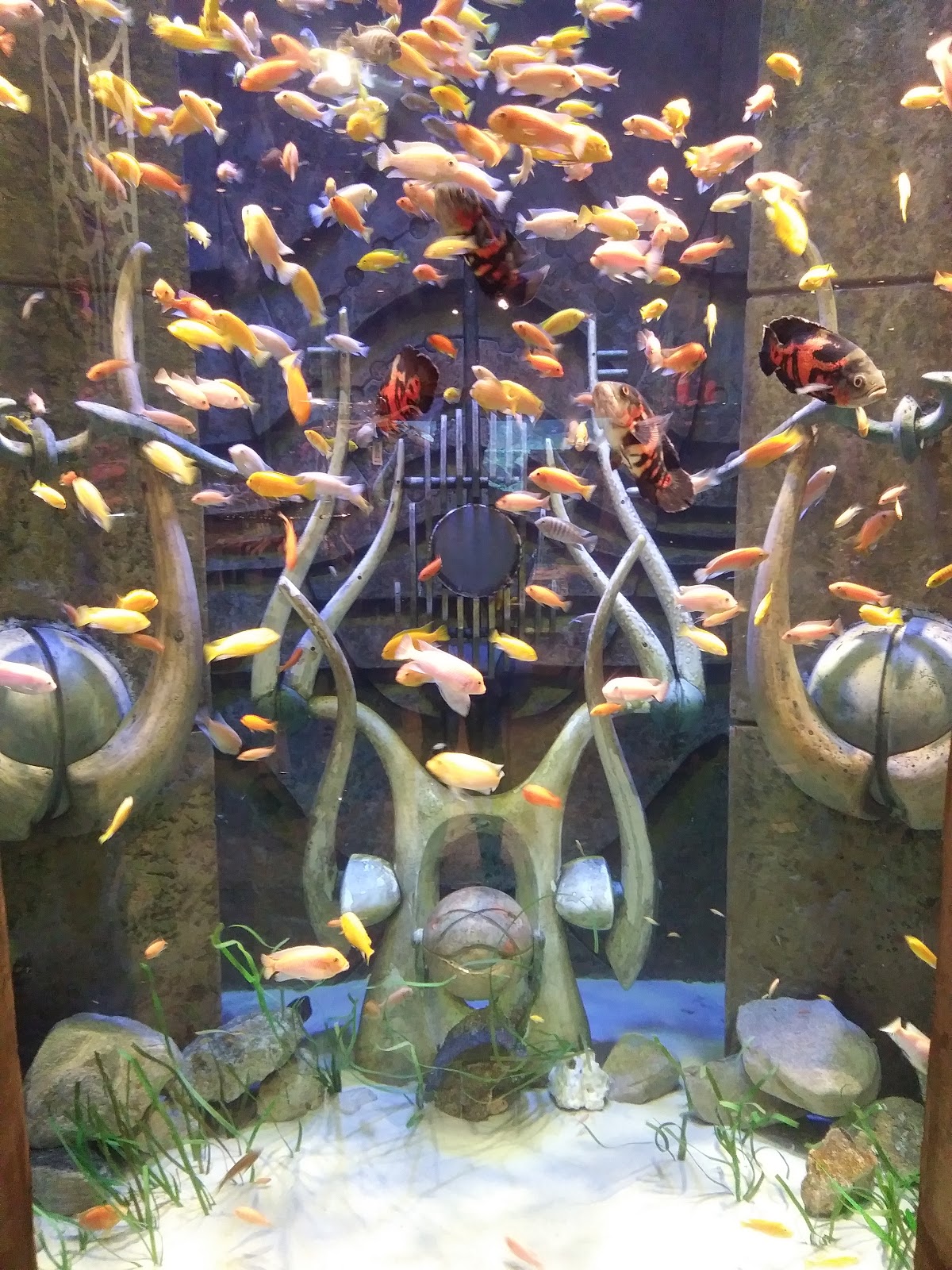
Aquarium at Palm Jumeirah

Fancy school bus

Fines

Jumeirah Beach with Burj Khalifa in the background

Box Park

Museum of Illusions

Abra at Deira Creek

No jaywalking

Diwali lights


Air-conditioned bus stop
Bus stop

Burj Khalifa


model of the tallest building in the world - Burj Khalifa

Sheikh Zayed Grand Mosque

inside the mosque

Sheikh Zayed Grand Mosque